 IPST – International Private School of Technology


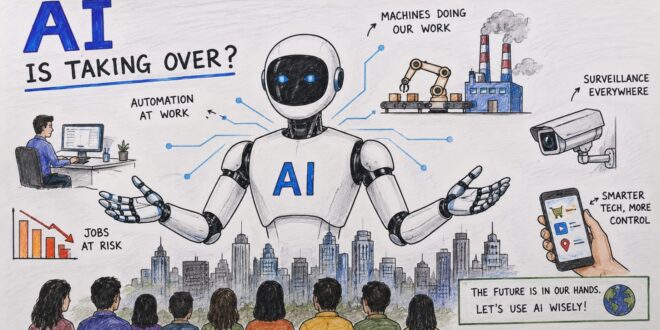
Artificial Intelligence (AI) is no longer a concept limited to science fiction. It has become a powerful force transforming industries, businesses, and everyday life. As AI technology continues to evolve, many people are asking the same question: Will AI take over the world? While the idea of an AI takeover often sparks fear, the reality is more complex. AI is reshaping how we work, communicate, and solve problems, but its future depends largely on how humans develop and regulate it.
What Is an AI Takeover?
An AI takeover refers to the possibility that artificial intelligence could perform or control tasks traditionally handled by humans. In popular culture, this often means intelligent machines replacing people or even making independent decisions without human oversight. In reality, today’s AI systems are designed to assist humans rather than replace them entirely.
Most AI applications focus on improving efficiency, automating repetitive tasks, and analyzing large amounts of data. From virtual assistants and recommendation systems to self-driving technology and medical diagnostics, AI is becoming an essential part of modern life.
How AI Is Transforming Industries
AI is revolutionizing multiple sectors by increasing productivity and reducing costs. Some of the most significant industries impacted include:
Healthcare
Artificial intelligence helps doctors detect diseases earlier, analyze medical images, and personalize treatment plans. AI-powered tools can process medical data quickly, allowing healthcare professionals to make informed decisions.
Business and Finance
Companies use AI to automate customer service, detect fraud, forecast market trends, and improve business operations. AI-driven analytics also help organizations make smarter strategic decisions.
Education
AI-powered learning platforms create personalized educational experiences by adapting lessons to individual students’ needs. Teachers also benefit from automated grading and administrative support.
Manufacturing
Smart factories rely on AI to optimize production lines, predict equipment maintenance, and improve quality control. These advancements reduce downtime and increase operational efficiency.
Will AI Replace Human Jobs?
One of the biggest concerns surrounding AI is job displacement. While automation may replace some repetitive and routine roles, it is also creating entirely new career opportunities.
Jobs involving creativity, emotional intelligence, leadership, and complex problem-solving remain difficult for AI to fully replicate. As technology advances, many professionals will need to develop new skills and adapt to changing workplace demands.
Rather than replacing all workers, AI is more likely to change how people perform their jobs by handling repetitive tasks and allowing employees to focus on higher-value work.
The Risks of an AI Takeover
Despite its benefits, artificial intelligence presents several challenges that society must address.
Privacy Concerns
AI systems often rely on large amounts of personal data. Protecting user privacy and ensuring responsible data collection remain critical priorities.
Bias and Fairness
AI models can unintentionally reflect biases found in their training data. Developers must continually improve algorithms to promote fairness and equal treatment.
Cybersecurity
As AI becomes more sophisticated, cybercriminals may also use AI-powered tools to launch more advanced attacks. Organizations must strengthen security measures to stay ahead of evolving threats.
Ethical Decision-Making
Questions about accountability, transparency, and responsible AI development continue to shape discussions among governments, researchers, and technology companies.
Can Humans Control Artificial Intelligence?
Experts generally agree that AI should remain under human supervision. Governments, businesses, and international organizations are developing regulations and ethical guidelines to ensure AI is used responsibly.
Responsible AI development includes:
- Human oversight in critical decisions.
- Transparent AI systems.
- Strong cybersecurity protections.
- Ethical data collection practices.
- Continuous monitoring and testing.
These safeguards help reduce potential risks while allowing society to benefit from AI innovation.
The Future of AI
Artificial intelligence will continue to evolve over the coming decades. Instead of replacing humanity, AI is expected to become an increasingly valuable tool that supports innovation across healthcare, education, transportation, finance, and scientific research.
Success will depend on balancing technological advancement with ethical responsibility. Collaboration between governments, businesses, researchers, and the public will help ensure AI serves humanity rather than creating unnecessary risks.
Conclusion
The idea of an AI takeover captures public imagination, but today’s reality is far less dramatic than science fiction suggests. Artificial intelligence is transforming industries, improving productivity, and creating new opportunities while also introducing important ethical and security challenges.
As AI continues to develop, responsible innovation, thoughtful regulation, and human oversight will play key roles in shaping its future. Rather than fearing AI, society should focus on understanding its capabilities, managing its risks, and using its potential to improve lives around the world.