 IPST – International Private School of Technology


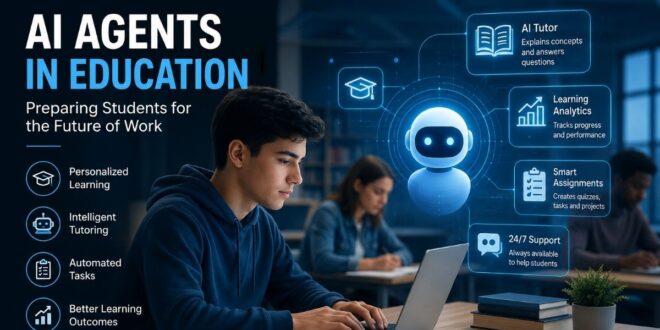
Artificial Intelligence (AI) is no longer a futuristic concept—it is becoming an essential part of education, business, and everyday life. In 2026, the emergence of AI Agents is revolutionizing how students learn, how teachers teach, and how educational institutions operate.
Unlike traditional AI chatbots that simply answer questions, AI agents can perform complete tasks, automate workflows, personalize learning experiences, and support students throughout their educational journey. This shift represents one of the biggest transformations in modern education and highlights the growing importance of AI skills for the workforce of tomorrow.
What Are AI Agents?
AI Agents are intelligent systems capable of understanding objectives, making decisions, using digital tools, and completing complex tasks with minimal human intervention.
Instead of simply providing information, they can:
- Create personalized learning plans
- Analyze student performance
- Generate quizzes and assignments
- Answer academic questions
- Assist with programming projects
- Provide real-time tutoring
- Automate administrative tasks
This new generation of AI is transforming education from passive learning into an interactive and personalized experience.
How AI Is Changing Education
Educational institutions around the world are integrating AI into classrooms and digital learning platforms.
Some of the most important applications include:
Personalized Learning
Every student learns differently. AI agents can adapt educational content according to each learner’s pace, strengths, and areas for improvement.
Instead of following the same lesson for everyone, students receive customized recommendations that improve engagement and learning outcomes.
Intelligent Virtual Tutors
AI-powered tutors are available 24/7 to answer questions, explain difficult concepts, and provide instant feedback.
Students no longer have to wait until the next classroom session to receive academic support.
Faster Administrative Processes
Educational institutions can automate repetitive administrative tasks such as:
- Student admissions
- Enrollment management
- Attendance tracking
- Academic reporting
- Student support services
This allows teachers and administrators to spend more time focusing on education instead of paperwork.
Why Students Should Learn Artificial Intelligence
Artificial Intelligence is becoming a core skill across almost every industry.
Future careers in software development, cybersecurity, digital marketing, healthcare, finance, engineering, and business will increasingly require professionals who understand how AI works and how to collaborate with intelligent systems.
According to recent education trends, AI literacy is quickly becoming as important as digital literacy for students preparing for tomorrow’s job market.
Students who develop AI skills today will be better prepared for careers that demand:
- Problem-solving
- Automation
- Data analysis
- Critical thinking
- Innovation
- Digital collaboration
AI and Practical Learning
Modern education is moving beyond memorization toward hands-on experience.
AI enables students to:
- Build real-world projects
- Develop intelligent applications
- Automate business processes
- Analyze data
- Create innovative digital solutions
Project-based learning combined with AI prepares graduates to meet industry expectations from their very first job.
The Role of Educational Institutions
Forward-thinking institutions are no longer teaching AI as an optional subject.
Instead, they integrate Artificial Intelligence into multiple disciplines, including:
- Software Development
- Multimedia Development
- Cybersecurity
- Networking
- Business Management
- Digital Marketing
This multidisciplinary approach ensures graduates understand how AI enhances productivity across different professions.
Why Learn AI at IPST?
At IPST – International Private School of Technology, students are encouraged to combine technical knowledge with practical experience.
AI is integrated into several learning activities to help students:
- Understand modern AI technologies
- Develop practical digital skills
- Build real-world projects
- Improve productivity using AI tools
- Prepare for emerging careers in technology
Our project-based learning approach helps students gain experience that reflects current industry needs while promoting creativity, critical thinking, and responsible AI usage.
The Future Belongs to AI Skills
Experts agree that Artificial Intelligence will continue transforming education, business, and society over the coming years.
Students who invest in learning AI today will be better positioned to adapt to technological changes, innovate within their professions, and contribute to the digital economy.
Educational institutions that embrace AI responsibly will play a key role in preparing the next generation of professionals for the careers of the future.
Conclusion
Artificial Intelligence is reshaping education by making learning more personalized, efficient, and practical. AI agents are helping students learn faster, educators teach more effectively, and institutions operate more efficiently.
For students, learning AI is no longer just an advantage—it is becoming an essential skill for success in the modern workplace. By embracing these technologies today, educational institutions such as IPST can equip future graduates with the knowledge and practical experience needed to thrive in the rapidly evolving digital world.